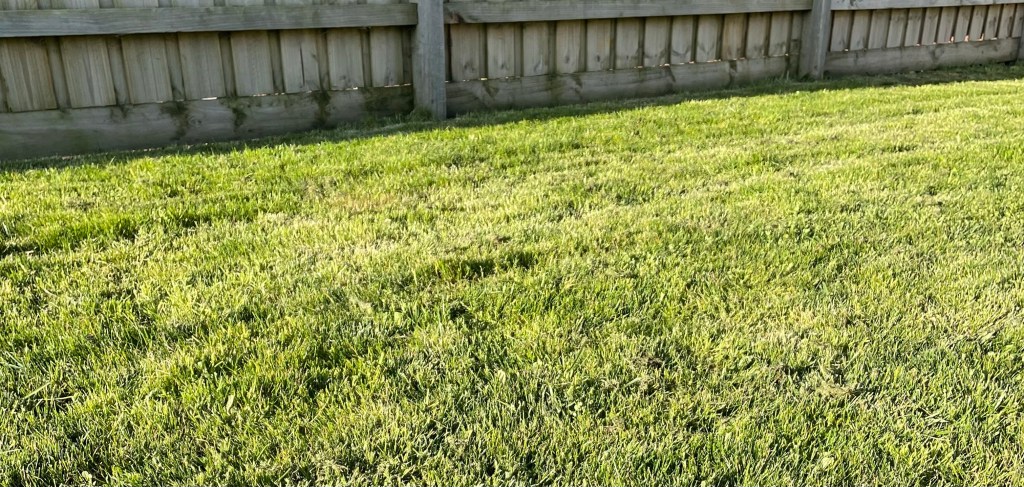
For the last two years, I’ve struggled to maintain a green, lush lawn.
I often get a spurt of lush green growth some time between Spring and Summer, after a dose of slow-release fertiliser and decent rainfall, but then it slowly goes down hill from there as the weather warms up.
How low or high do I cut?
Do I cut once?
Twice?
Thrice…?
Why are weeds taking over?
When do I water?
Here’s what I’ve found works:
Remove the weeds
Pick up a hand weeder tool from your local hardware store and dig out all the weeds; it could be Dandelion, Bindi (sometimes spelt Bindii) or Capeweed. It’s easier to spot them before cutting. Plus, if you don’t have a catcher, you’ll just be cutting up the weeds and spreading them across the lawn.
If you have too many weeds and your back, like mine, gets sore after manually pulling out a few, you can go for the ‘auto’ method. Pick up a weed-and-feed product and spray it over your lawn, following the product’s directions.
And if you’re feeling up for it, do both. Weed your lawn and then spray a weed and feed product to kill off any baby weeds or ones you may have missed.
Some weed-and-feed products cannot be used on new lawns, so read the directions before purchasing.
Cutting height
There are arguments for cutting low, cutting high, cutting once, cutting twice and probably cutting three times. It’s a process of trial and error.
Do what works best for you: Take a before photo and after photo, write down which cutting height you used, and repeat two to three times on different settings so you can see what looks good.
With my old mower, the lawn used to grow back thick and lush on two cuts. Cutting once saw bits of grass poking up and discolouration. But then I received a new mower for Christmas (thanks Mum and Dad!) and it does a great job with just one cut.
Fertiliser
Firstly, find out which grass type you have and then research which fertilisers suit your lawn to ensure maximum effectiveness.
Slow-release fertiliser will help your grass thicken, which will in turn reduce weeds. And it looks better – it’s more green and lush.
I spread fertiliser in the early stages of Spring, in late August to early September, and then again in Autumn, between March and April. The lawn always looks great post-fertiliser. If you’re having friends or family over, apply fertiliser up to a week before and it will spruce it up in no time.
Spread fertiliser as evenly as possible otherwise you’ll just end up wasting it. You can pick up a lawn seed spreader which also works well to distribute fertiliser consistently.
Watering
I always give the lawn a good watering after mowing during the warmer months.
I try not to water it more than twice a week during warmer periods, otherwise the lawn will become overly reliant on me watering it and then when I forget, it will go into shock and turn brown.
Watering before a hot day is crucial to keeping your lawn happy. Give it a good soaking after sunset or in the morning before it heats up.
Sprinklers offer a consistent spread for lawns, but when it comes to plants, a water gun is best to conserve water. To ensure sprinkler water doesn’t go to waste, set a timer on your phone or use a tap timer so you can control when your sprinkler is on.
 Matt's Plants & Co - Australia
Leave a comment