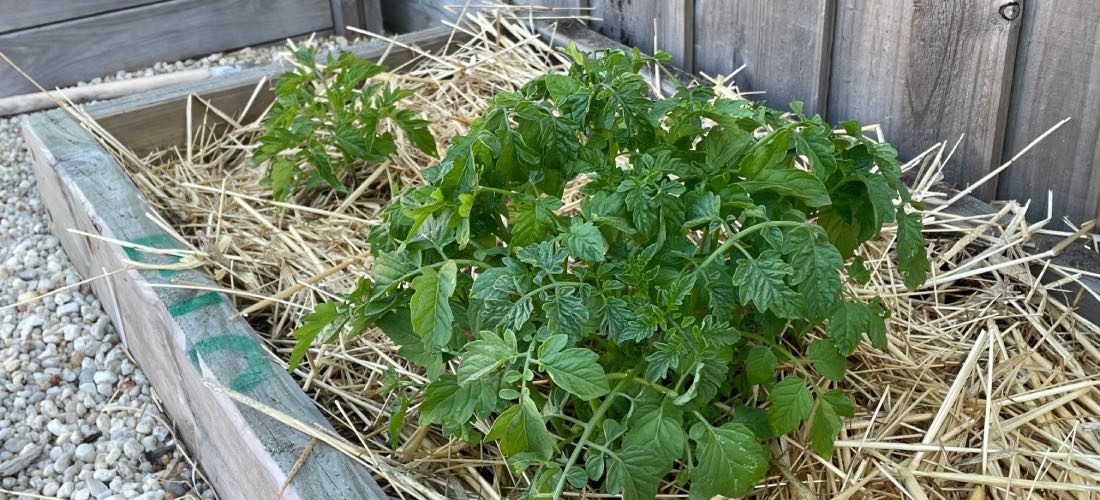
Authorities are urging gardeners to use insect-proof netting to shield their tomato plants from pests.
Most tomatoes grown by home gardeners are indeterminate varieties, which continuously flower and set fruit, according to Agriculture Victoria State Fruit Fly Coordinator Cathy Mansfield.
“The best time to apply insect-proof netting is after most of the flowers have been pollinated but while the fruit is still small,” Ms Mansfield said.
“This ensures your crop is protected without interfering with pollination.”
The same applies for other continuously flowering fruit and vegetables such as eggplants and capsicums.
There are some varieties that all flower and then all ripen around the same time, like Roma or San Marzano, so net these as soon as flowering finishes, authorities say. These types are often used to make passata.
Netting your fruit and vegetables reduces opportunities for Queensland fruit fly to lay eggs, helping to protect not only your harvest but also your neighbours’ crops and the wider horticulture industry.
“Check the netting is secure each time you harvest your tomatoes, and repair any holes promptly to maintain protection,” Ms Mansfield said.
In Victoria, the mesh size must be 5mm x 5mm or less.
Agriculture Victoria said: “For gardeners who choose not to use netting, alternative control methods such as insecticides and bait sprays are available. Always follow label directions about when and how to apply chemicals.”
Stings on tomatoes will look like a pin prick on the surface of the fruit, and when cut open you may have maggots inside. If your tomatoes have been infested with fruit fly make sure you treat by bagging and putting in the sun, microwaving or freezing solid to kill the maggots.
Avoid placing infested fruit in compost, as this can allow fruit fly to emerge and infest future crops.
For more information about how you can control Queensland Fruit Fly in your home garden, visit the Agriculture Victoria website.
Leave a Reply