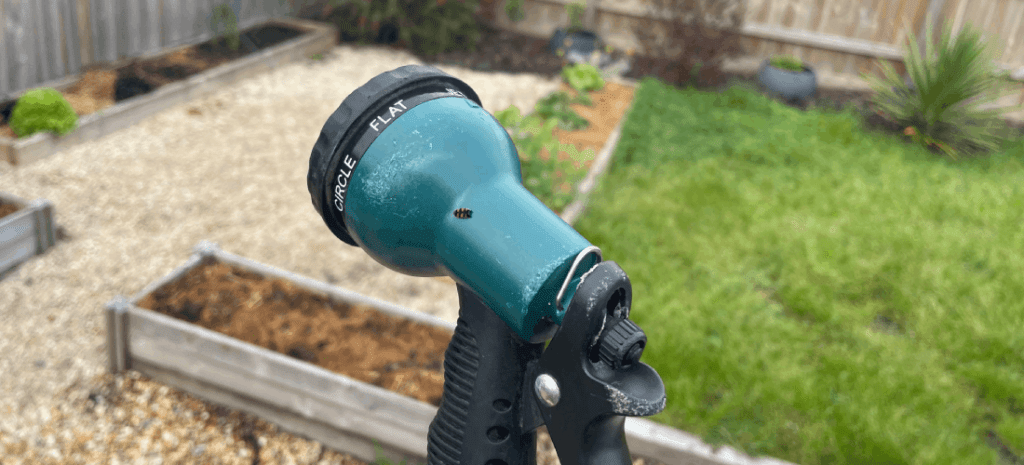
I’ve wasted loads of water in the garden. Sometimes I will forget to turn off the tap when using the sprinkler on the lawn or I just over-water plants when they are already more than happy.
So, when do plants need water? How do I bring down my water bill? And how can I minimise the amount of water I use on the garden without compromising my vegies?
Good soil
Compost helps retain water and it is great for your vegies, too. It is stocked full of all the good stuff which will help your plants adapt to the conditions and then thrive.
Using mulch on your soil is the next thing to do to maintain moisture and stop water from evaporating. Pick a mulch which allows water to flow down the soil, but is also good for your plants (I use sugar cane mulch), so your plants get a boost of nutrients with every watering.
Mulch also keeps the soil cooler during hot weather, so you’re spending less time watering.
Top up your mulch before the weather really warms up. I add a few inches at the start of January or late December, if it’s hot enough.
Choose hardy plants
Growing plants that require less water and are drought resistant will help reduce your water use. Plants with larger leaves require a lot more water compared to slender-leaved plants. So, talk to your local nursery about plants which don’t require much water once established.
Water the right way
Using a sprinkler is easy, but they waste water and don’t even do much for your plants. Water on leaves evaporates quickly, so you need to focus your efforts at the roots of the plants – through a soaker hose or a watering can.
Your hose matters, too. A modern soaking hose may have benefits that an older hose does not have: using less water, less leaks (or ideally, no leaks).
Many gardeners water their garden plants on a regular basis without checking the soil to see if this is necessary. One way to check the wetness level of the garden is to dig down into the soil about five inches with a shovel. You will be able to see dry soil near the top if your garden needs watering.
Timing your watering
Watering your plants in the morning or evening can make a lot of difference in conserving water. Naturally, evaporation isn’t much of a problem without the sun, so plants can absorb more water and water isn’t wasted if you wait until it’s dark.
It’s generally better to water plants in the morning to avoid mildew and other issues, but sometimes it can’t be helped, so in the evening is the second-best option.
Group plants together
Grouping and placing plants on the basis of their watering needs is one of the best ways to save water. This is called hydrozoning, and it can improve water efficiency greatly as you can avoid overwatering and underwatering other plants and cater specifically to the needs of a group of plants.


 Matt's Plants & Co - Australia
Leave a reply to Matt Cancel reply