
Our garden is in full bloom with a spectacular display of deep red tulips, bringing a vibrant pop of colour amid the changing seasons. These tulips have offered a refreshing contrast to the more subdued hues of winter and are standing out beautifully as we transition toward the warmer months.
It’s a wonderful reminder of nature’s resilience and its ability to brighten our spaces even as winter veggies begin to fade and our spring crops lie in wait for the warmer weather to settle in.
This is our first season growing tulips, and it’s been a gratifying experience. Not only have these flowers required minimal care, but they’ve also proven to be tough – enduring a fair share of challenges, especially with the wind.
The beginning
I was thrilled to start with a 20-pack of ‘Pallada’ Triumph Tulips, which I bought for around $30. These tulips were labeled as hardy and simple to grow – perfect for a first-time tulip gardener.
According to the packaging, the ‘Pallada’ variety would require no chilling in Victoria (and in other cooler regions like South Australia, Western Australia, Tasmania, and parts of New South Wales). Additionally, they wouldn’t need annual lifting if fertilised well after blooming, which was an added bonus. All these factors made them an attractive choice for me, as low-maintenance plants are always appealing when trying something new.
I planted the bulbs in early July, placing them about 10 centimeters deep in pots and ensuring each bulb was spaced enough to allow for proper growth.

By September, the first flowers were already pushing through the soil.
The packaging recommended full sun or part sun, and low water – tips I followed, though I suspect I may have overwatered them slightly at times. Tulips don’t like overly wet conditions, as excess water can lead to root rot.
Battle with the elements
One of the unexpected challenges with our tulips has been protecting them from high winds. One particularly gusty day, their delicate petals were being torn from the stems, and we knew a relocation was necessary to preserve them.
While tulips are hardy flowers, they’re not immune to damage from such intense elements, so finding them a spot away from the wind helped them thrive in our garden.
Initially, we had the tulip pots spread across different parts of the backyard. But after observing their impact, we decided to cluster them together. Grouping the tulips not only intensified the visual effect but also made them easier to manage in adverse weather.
We also switched them to ceramic white pots, which brought out the rich red tones of the flowers even more than the black plastic pots they originally sat in.

Post-flowers
After tulips bloom, they can be cut back to encourage next year’s growth.
Once the flowers are spent, I cut off the stems and allow the foliage to die back naturally, which helps the bulbs store energy for the following season.
The pots can then be set aside, ideally in a cool, shaded place, until it’s time to bring them out again next year.
Touch of tradition
My grandfather, Opa, recently gifted me a couple of charming, old-fashioned pots, which I found perfect for these tulips. To me, this felt like a nod to my heritage, especially considering Opa’s roots in the Netherlands.
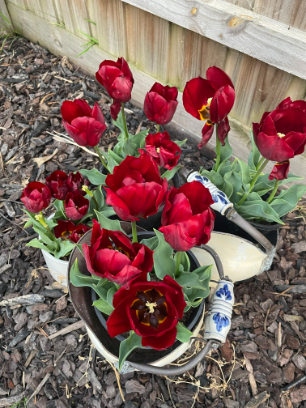
Although tulips are not native to the Netherlands – a surprise to many, as they are so closely associated with Dutch culture – planting them in these pots felt like a tribute to where he came from.
In fact, tulips have a fascinating history. According to the Encyclopaedia Britannica, tulips are originally native to Central Asia and Turkey. They were cultivated as early as the Persian Empire, where their beauty was admired for generations before they became popular in Europe.
When they finally arrived in the Netherlands in the 16th century, they quickly became a symbol of wealth and status, ultimately leading to a period in Dutch history now known as Tulip Mania.
The mania
The phenomenon of Tulip Mania in the 1600s can be compared to more recent financial bubbles, such as the housing crisis of the early 2000s.
During this time, rare tulip bulbs became highly sought after, leading people to invest significant amounts of money in these flowers. Prices skyrocketed to astonishing levels, and some individuals went so far as to take out loans just to buy bulbs, expecting the value to keep climbing.
However, as with most economic bubbles, it eventually burst, and many people lost their investments when the prices came crashing down. While this era was short-lived, it left a lasting impression on Dutch culture and established tulips as an iconic symbol of the Netherlands.
Tesselaar Tulip Festival
For anyone wanting to see more tulips in all their colourful glory, the Tesselaar Tulip Festival is a must-see event. Running annually in the Dandenong Ranges near Melbourne, this festival showcases a variety of tulips in every colour imaginable. Rows upon rows of blooms cover the landscape, creating an almost surreal display of colour and design.

Aside from the beautiful flowers, the festival also celebrates Dutch heritage and culture, with music, dancing, and food. It’s an opportunity to experience the charm of a Dutch spring right here in Australia, and to learn more about the history and significance of these iconic blooms.
And another thing
Growing tulips has been a rewarding endeavour, filling our garden with colour and providing a learning experience about the plant’s care and history.
These flowers have offered not only aesthetic appeal but also a sense of heritage and connection to my family’s roots. I’m already looking forward to the next tulip season and perhaps even experimenting with different varieties or colours to add to our collection.
Happy gardening, and may your tulip journey be just as enjoyable!
Updated: October 1, 2024
Originally published: September 23, 2023


 Matt's Plants & Co - Australia
Leave a comment